Welcome!
The Directors of The Parkinson’s Research Foundation note the passing of their chairman and founder, Louis Powell on April 7, 2009. His foresight created the foundation, and we will continue to support his vision. His leadership, guidance, and above all else, his friendship meant a lot to all of us, and we will sorely miss him. His dedication to philanthropic goals has been the cornerstone of many other foundations and an example for all of us to emulate. We extend our deepest condolences to his family, Margaret, Michael Jr. and Margaret Ann.
Click here to sign Louis Powell’s Guestbook
Click here to watch Louis Powell’s Memorial Service
Our Mission And Goals
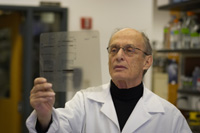
The Parkinson’s Research Foundation sponsors research at leading academic centers in the U.S. The centers are headed by the foremost leaders in Parkinson’s research and were chosen for the high quality of their research programs. Each has already made significant contributions to the understanding of the disease and possible treatment therapies.
Read More →A Window Into Parkinson's Disease
Click here for the largest Parkinson's finding in 25 years
Click here
Rockefeller University
The Stern Center at The Rockefeller UniversityUnder the direction of Nobel Laureate Dr. Paul Greengard, the Stern Center at The Rockefeller University has concentrated their research on discovering why, of the two major populations of dopamine neurons in the brain, one is more susceptible to cell death in PD than the other. Dr. Greengard’s scientist have created a very sensitive method for separating these two types of neurons that has allowed the identification of many differences in their gene function. This is expected to provide new drug targets for the treatment of PD. Drugs that address these targets would have the potential to arrest disease progression.
Read More →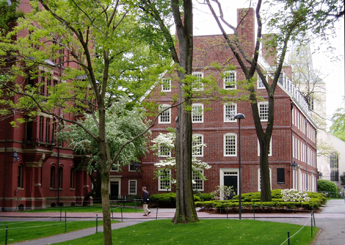
Harvard University
At Harvard University’s McLean Hospital, we support the research of Dr. Ole Isacson whose research lab, The Stern Center for Neuroregeneration Research is using gene therapy to protect the most vulnerable neurons in PD models. Through this gene therapy, Dr. Isacson’s lab was able to protect the most vulnerable neurons in PD models. Dr. Isacson’s lab was able to generate neurons from dopamine cells that were transplanted. These scientists also have made significant progress in studying a molecule called G-substrate, a phosphatase inhibitor. In human studies, they have found that transplanted fetal neurons can survive in patients for at least 14 years.
Read More →
IND - The Institute for Neurodegenerative Disorders (IND)
The MSPRF sponsored research at the IND is conducted under the direction of Yale Professors Dr. Ken Marek and Dr. John Seibyl. This lab is developing novel tools for early detection and monitoring of Parkinson’s disease by studying physiologic, biochemical and neuroimaging biomarkers for non-dominergic manifestations of Parkinsonism. The IND has been active in the expansion of Amadeus (American and European Union SPECT Imaging Consortium) to continue the application of rigorous, standardized quantitative neuroimaging technology in multi-center trials to improve diagnosis and evaluate treatments for Parkinson disease and related disorders. They have initiated a multi-site study to develop smell testing and brain imaging as a potential tool for early diagnosis of Parkinson disease.
Read More →